
This post may contain affiliate links. Please read our disclosure policy.
Learn the best method for cutting broccoli so you end up with perfectly sized florets and just enough stem on the end. You will have uniform pieces for roasting, eating raw, or adding to a variety of recipes. Also, find out tips for buying, washing, and storing fresh broccoli.
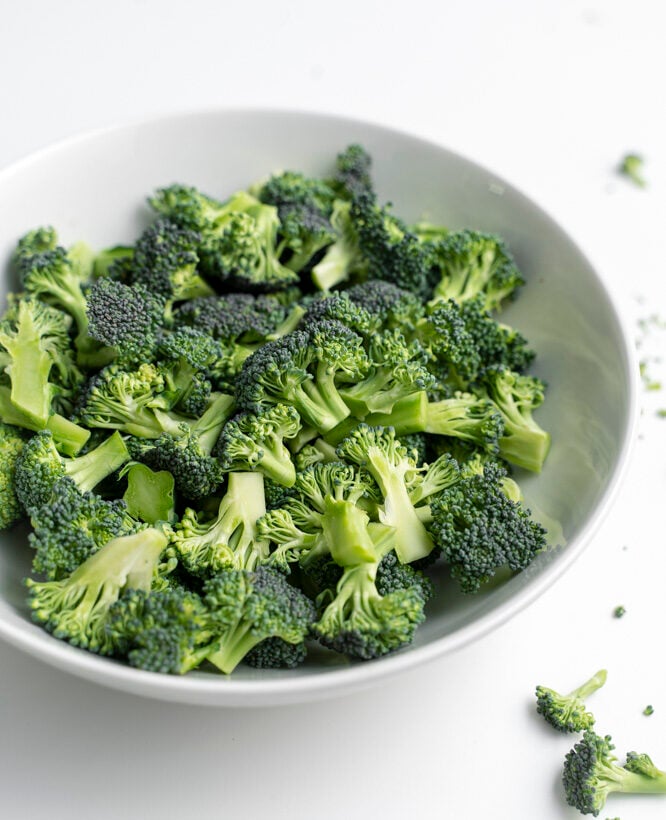
Once you learn this simple method for how to cut broccoli, you will have uniform-sized florets for dipping into Homemade ranch dip, adding to stir-fries like this Shrimp and Broccoli Stir Fry, adding to casseroles like this broccoli cheese casserole, and so much more!
Broccoli is one of the best foods to add to your diet, and enjoy it often! Not only is it low in calories and fat-free, but it is also a good source of plant protein and contains many nutrients.
Follow our step-by-step tutorial on how to cut a fresh broccoli head into florets.
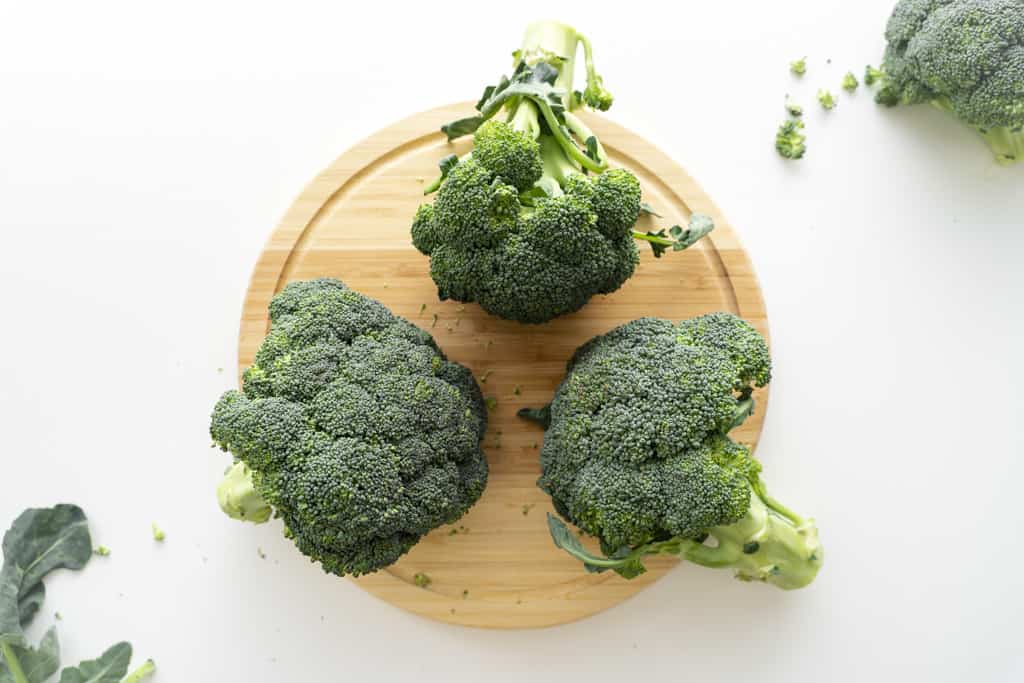
What you’ll need
Here’s what I recommend for cutting broccoli into florets:
- Knife: Use a large 7 to 8-inch chef’s knife or paring knife to make cutting a head of broccoli easier. You may also want a paring knife for slicing off the stems from smaller florets.
- Cutting board: For cutting vegetables, you’ll want a cutting board that is gentle on your knife edge, easy to clean, and durable. Wood and bamboo cutting boards are popular choices for cutting vegetables as they are gentle on knife edges and can help to maintain the sharpness of your knives.
- Broccoli: Grab as many heads of broccoli as you need for your recipe. One head of broccoli is equal to about 3 1/2 cups of florets.
How to cut broccoli into florets
Broccoli is one of the easiest veggies to cut, and doesn’t make too much of a mess. Here’s how:
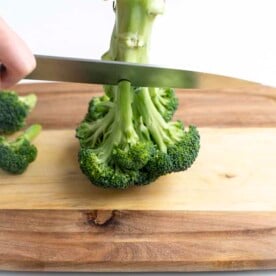
- Cut off the stalk: Start with the head of the broccoli down on the cutting board, slice through the stalk to separate it from the smaller stems and the head of the broccoli, about 1 inch below the base of the head.

- Remove the stems: You can leave the stems longer, or cut the stem completely off making the florets more stubby, depending on how you plan to use them.
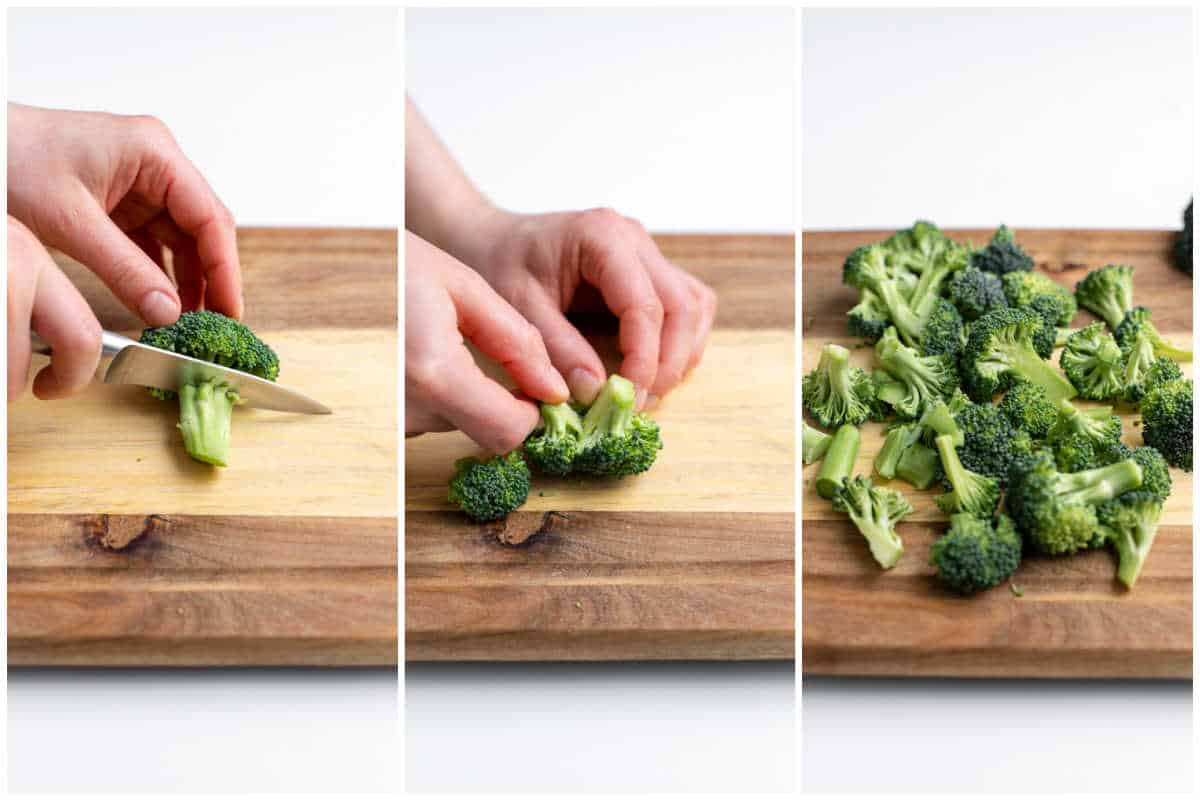
- Slice apart florets: Slice through any very large florets, and pull the floret apart with your fingers. You can leave the florets larger for recipes like air fryer chicken and broccoli, or create smaller pieces of broccoli depending on your desired use. Smaller pieces are good for adding to cheesy pasta casseroles.
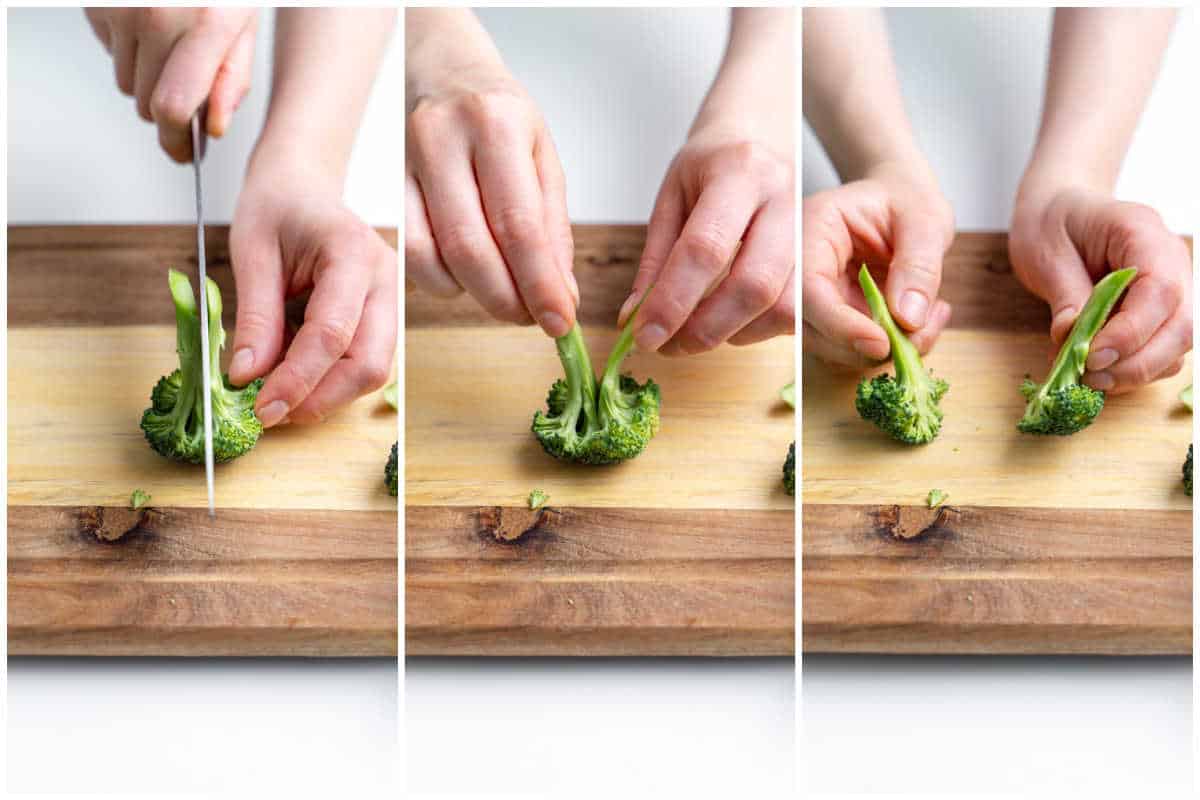
- Make smaller florets: For short, stubby broccoli florets without a stem, slice through them the same way, and then pull them apart with your fingers, as seen below.
Quick tips
- Uniform size: Cut the broccoli florets into similar-sized pieces to ensure even cooking. For roasted broccoli, cut the florets into 1 to 1 1/2-inch pieces. If you are adding the florets to soup, salad, or a casserole, we recommend cutting them into even smaller bite-sized pieces.
- Buying: Look for broccoli that is bright green and has a firm stalk, free of discolorations or brown spots. It should also feel heavy for its size.
- Washing: Just before cutting, rinse the broccoli plant under running cool or warm water. You can soak it in water for a couple of minutes, but no more than 5, as longer soaking can cause nutrient loss.
- Serving amount: One serving of cooked or fresh broccoli is 1 cup and contains approximately 30 calories. One head of broccoli yields about 3 to 4 servings of florets.
Common questions
Yes, you’ll want to cut the stems or stalks off the broccoli. However, don’t throw them away! The stems and stalks are super nutritious and can be used in a variety of ways. The entire stalk can be spiraled into veggie noodles. You can also chop them up and add them to salads, soups, and stir-fries.
You can actually eat the entire broccoli plant! The top parts of the head are the most common parts to consume, but the broad outer leaves, stems, and florets can all be eaten raw, steamed, grilled, sautéed, roasted, or cooked any other way.
Yes. I highly recommend thoroughly washing your broccoli before or after cutting it into florets. Their nooks and crooks are the perfect spot for dirt, debris, and bugs to settle and hide.
Recipes with broccoli
- Healthy Broccoli Cheddar Soup
- Air Fryer Broccoli
- Chicken Cheese Broccoli Rice Casserole
- Beef and Broccoli Stir Fry
- Creamy Chicken and Broccoli Skillet
- Creamy Broccoli Cauliflower Salad
How to store cut broccoli
- Storing: Store freshly cut broccoli in an airtight container in the fridge for 3 to 4 days.
- Freezing: Flash-freeze the cut broccoli for 30 minutes on a baking sheet, then transfer to a freezer bag. It will keep fresh for up to 6 to 9 months.

More how-to cut guides
- How to Cut Sweet Potatoes
- How to Make Oat Flour
- How To Cut Romaine Lettuce
- How to Cut Brussel Sprouts
- (3 Ways) How To Cut Bell Peppers
- How To Cut an Orange
- How to Cut Cabbage
- Cutting Potatoes Into Fries
- How To Cut Green Onions
If you try a recipe and you like it, leave me some feedback in the comment section below, and don’t forget to rate it! I would love it if you shared it with friends and family.
FOLLOW me on FACEBOOK | INSTAGRAM | PINTEREST | TWITTER for all of my latest blog posts and recipes.
How to Cut Broccoli
Equipment
- cutting board
- Chef's knife
Ingredients
- 1 head broccoli
Instructions
- Start with 1 head broccoli on the cutting board, slice through the stalk to separate it from the smaller stems, and then cut the head of broccoli, about 1 inch below the base of the head.

- You can leave the stems longer, or cut the stems completely off, making them more stubby, depending on how you plan to use them.
- Slice through any very large florets, and pull the floret apart with your fingers. You can leave the florets larger for recipes like air-fried or roasted broccoli, or cut them into smaller pieces depending on your desired use.


Notes
- Storage: Store freshly cut broccoli in an airtight container, in the fridge for 3 to 4 days.
- Freezing: Flash freeze the cut broccoli for 30 minutes, on a baking sheet, then transfer to a freezer bag. It will keep fresh for up to 6-9 months.
Nutrition
Nutrition information is automatically calculated, so should only be used as an approximation.
