This post may contain affiliate links. Please read our disclosure policy.
Making homemade pumpkin puree is much easier than you might think. All you need is a small pumpkin and an oven! Roast it until tender, scoop out the flesh, and blend until smooth.
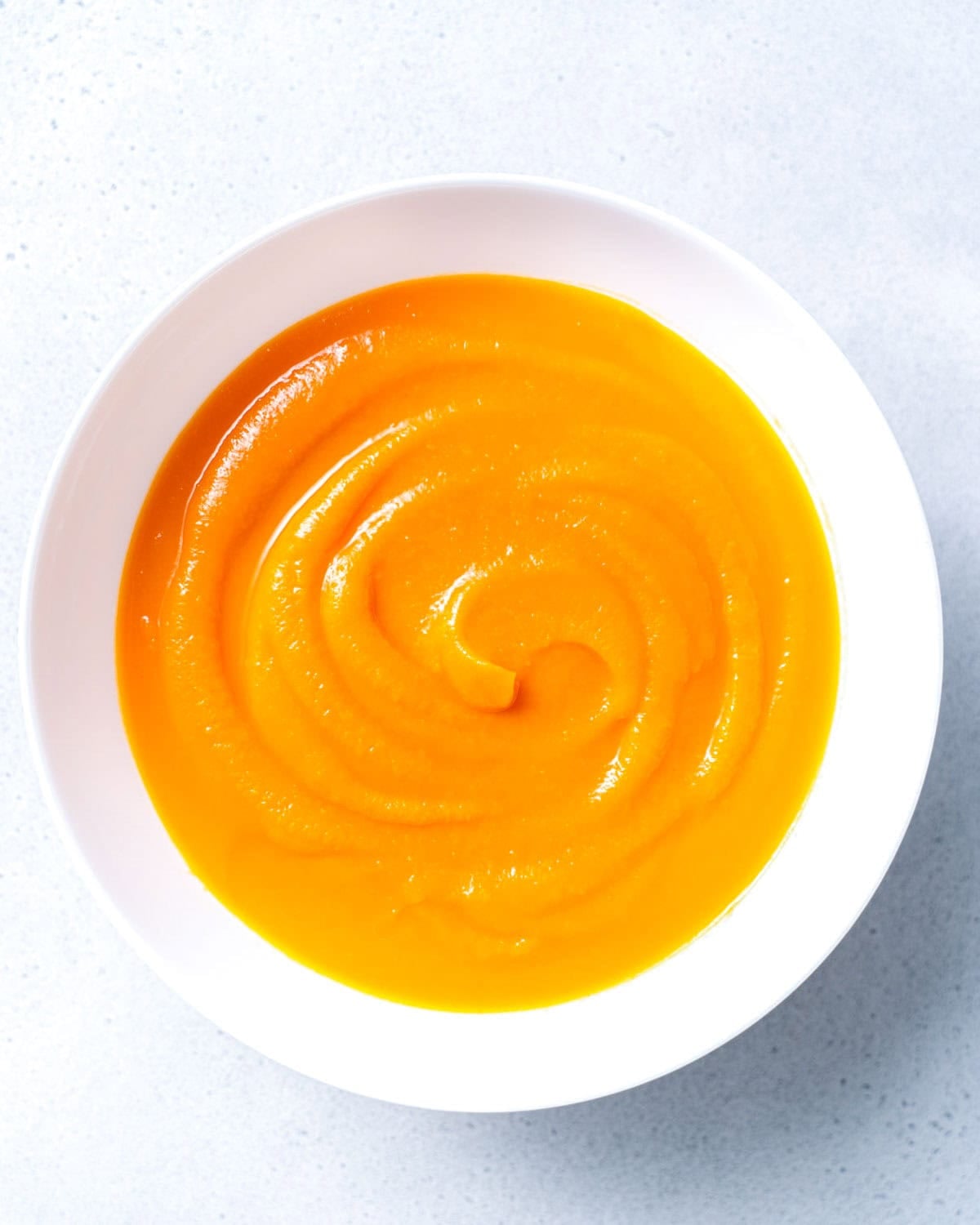
I usually grab canned pumpkin because it’s convenient, but when pumpkins are everywhere in the fall, making a batch from scratch is so easy. I use it in pumpkin bread, to make pumpkin muffins, Pumpkin Pancakes, pumpkin soup, and most of my favorite fall recipes.
I also love that I can freeze the extra in 1-cup portions and have it ready whenever I’m baking.
Recipe Overview
What Is Pumpkin Puree?
Pumpkin puree is just cooked pumpkin that has been blended until smooth. That’s it, nothing fancy.
For a homemade pumpkin puree, I like roasting the pumpkin rather than boiling it. Roasting keeps you from adding extra water and gives the pumpkin a richer flavor.
And just to clear up a common question, pumpkin puree and pumpkin pie filling are not the same thing. Pumpkin pie filling usually has sugar and spices added to it. Pumpkin puree is plain pumpkin.
The Best Pumpkin for Pumpkin Puree
Not all pumpkins are the same! Look for smaller pumpkins, often labeled sugar pumpkins or pie pumpkins. They tend to have a sweeter, smoother flesh than the large pumpkins sold for carving.
Other small edible pumpkin varieties can work too. I wouldn’t recommend those huge Halloween carving pumpkins if you can get the smaller kinds. They’re edible, but the flesh tends to be more watery and stringy and has less flavor.
How to Pick a Good Pumpkin
Choose one that feels heavy for its size and is firm without any soft spots.
A smaller pumpkin is also much easier to cut and handle than a giant carving pumpkin.
What You’ll Need
You only need one ingredient:
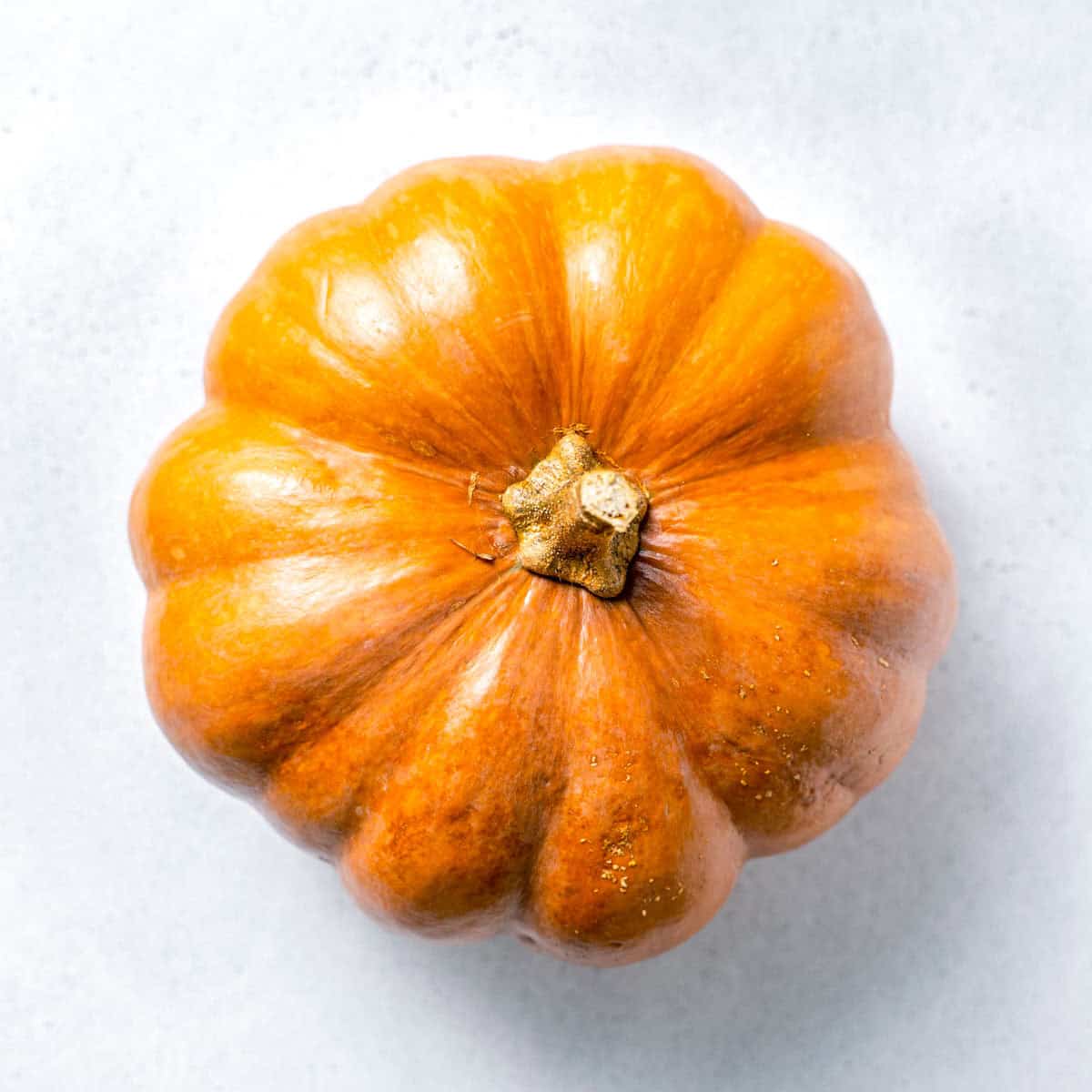
Pumpkin: Use any smaller cooking variety. Sugar pumpkins or pie pumpkins are my first choice.
For equipment, you’ll need a sharp knife, cutting board, spoon, baking sheet, parchment paper, and a food processor or blender.
How to Make Pumpkin Puree
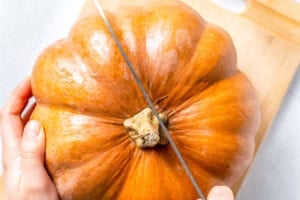
Cut the pumpkin: Preheat your oven to 400°F and line a large baking sheet with parchment paper. Wash and dry the pumpkin thoroughly. Place it on a sturdy cutting board and carefully cut it into quarters using a sharp knife.
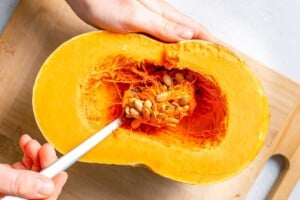
Remove the seeds: Use a large spoon to scoop out the seeds and stringy center from each piece. Don’t throw away those seeds if you like roasted pumpkin seeds! You can rinse them, dry them, season them, and roast them separately.
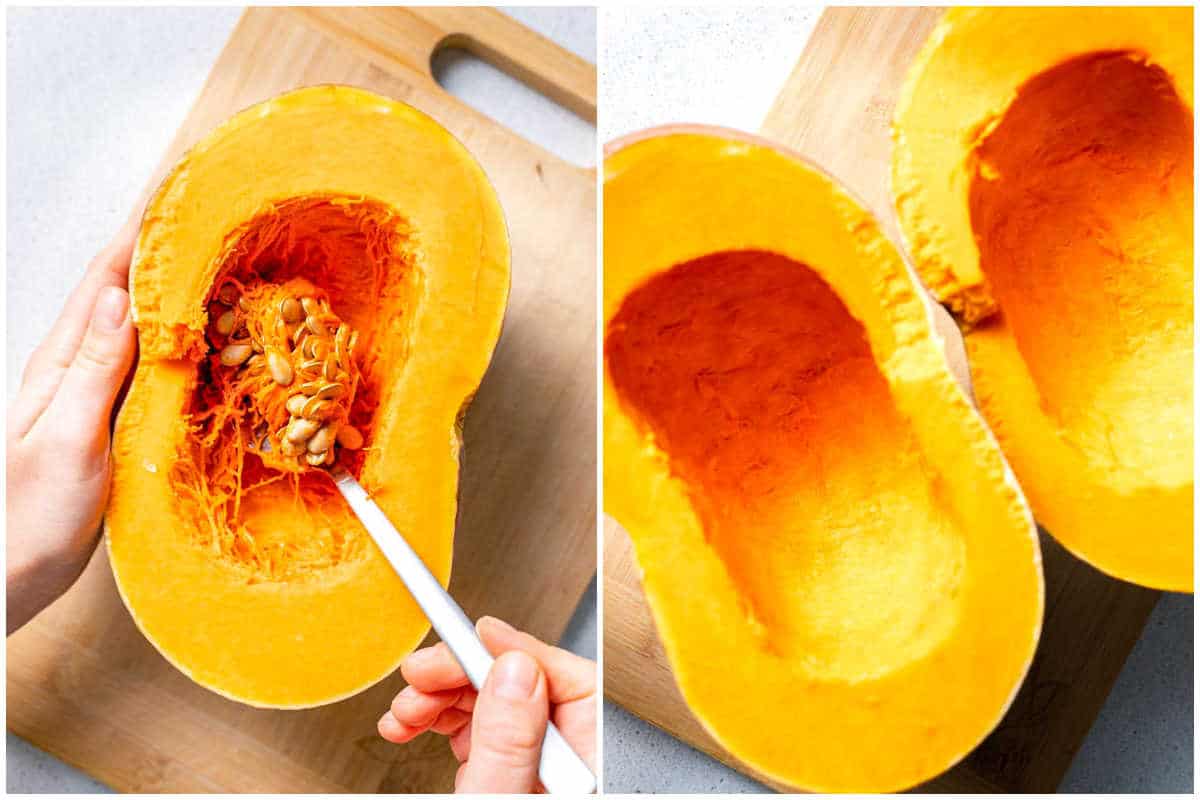
Roast the pumpkin: Arrange the pumpkin pieces on the prepared baking sheet.
Roast at 400°F for 40 to 60 minutes, depending on the size and thickness of your pumpkin pieces. You’ll know it’s ready when the flesh is very soft and you can easily pierce it with a fork.
Let it cool: Remove the pumpkin from the oven and allow it to cool until it’s comfortable enough to handle.
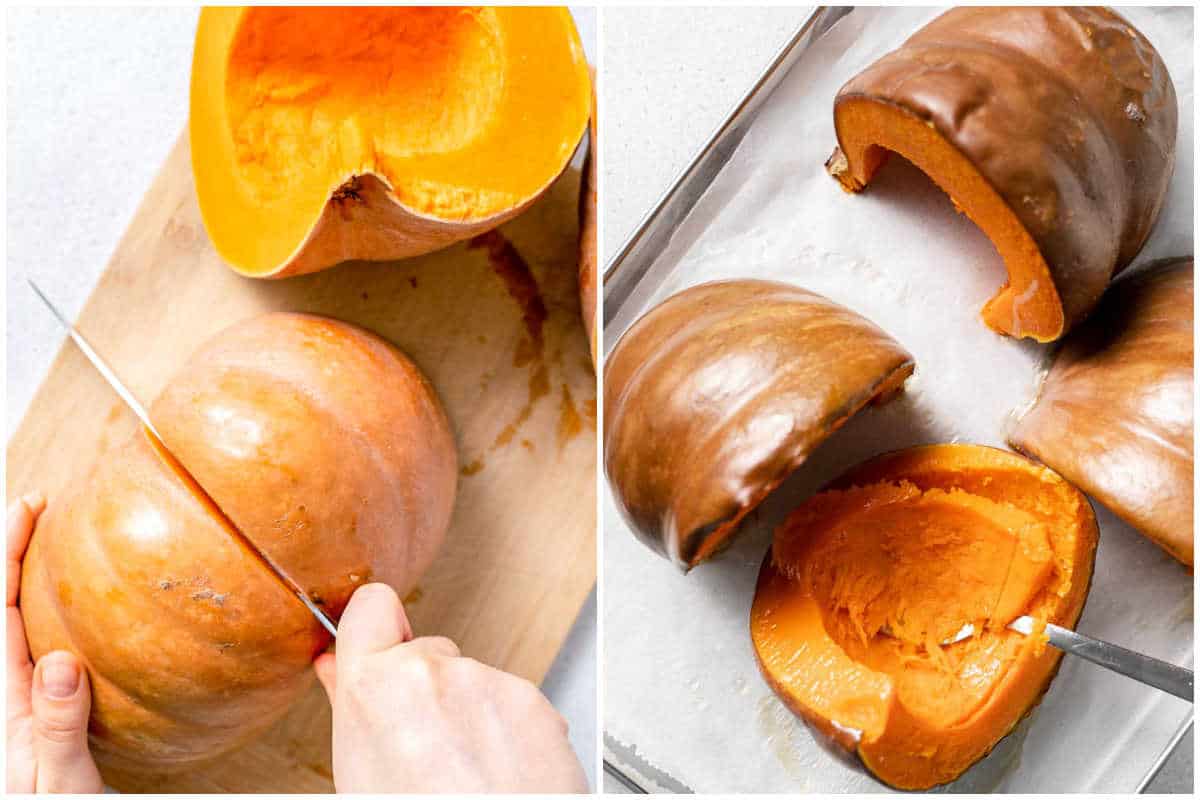
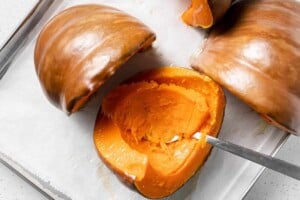
Scoop out the flesh: Use a spoon to scoop the soft pumpkin flesh away from the skin. The skin should separate pretty easily once the pumpkin is properly cooked.
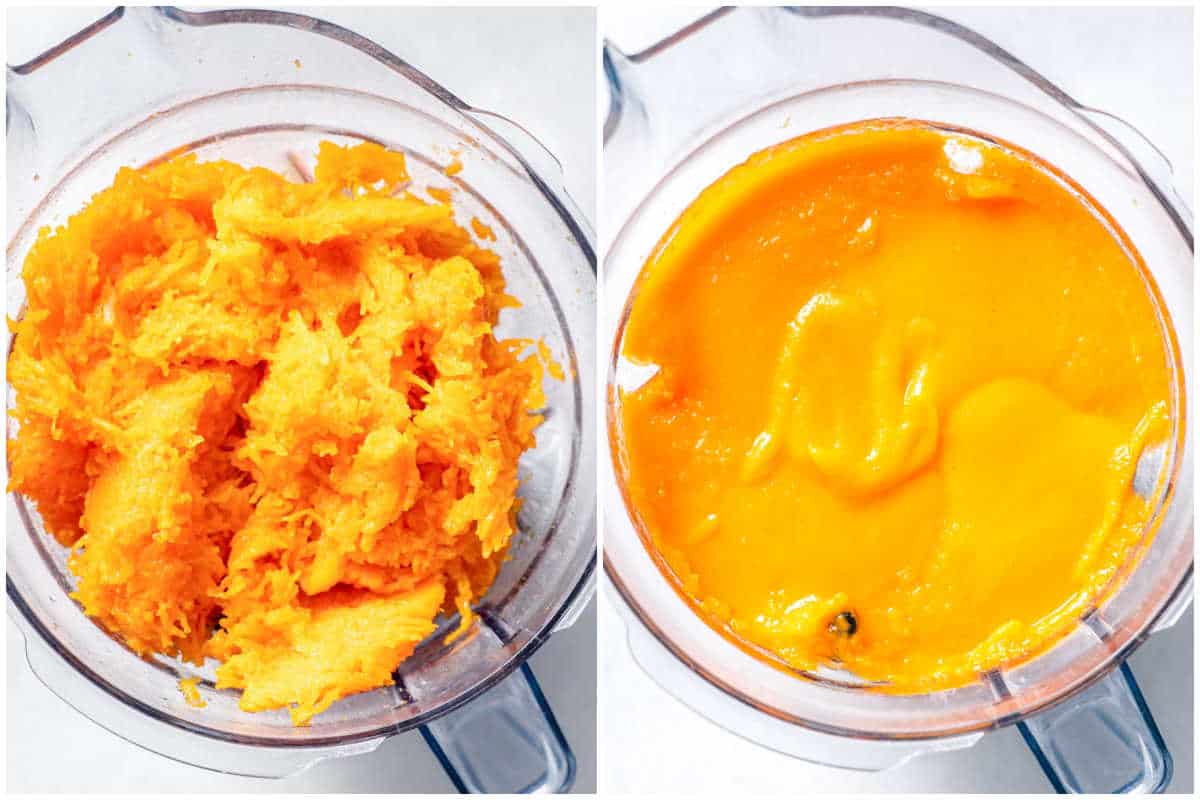
Blend: Transfer the cooked pumpkin to a food processor or high-speed blender.
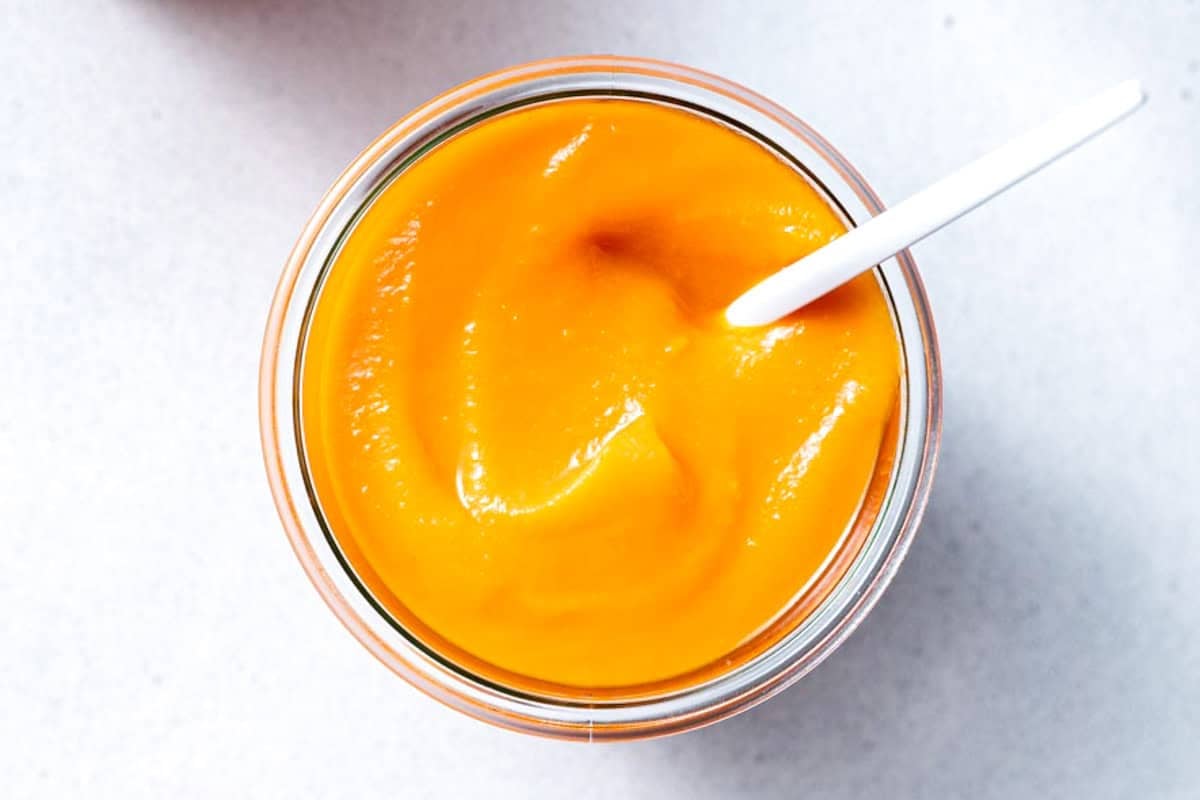
Blend until completely smooth and creamy. You may need to stop once or twice and scrape down the sides. That’s it! You have homemade pumpkin puree.
What If My Pumpkin Puree Is Too Thick?
Pumpkins will vary in moisture depending on which one you use. If the puree is so thick that your blender or food processor is having trouble moving it around, add a very small amount of water, about a tablespoon at a time, just until it blends.
Be careful to not add too much water. You want the pumpkin puree to stay nice and thick, especially if you’re planning to bake with it.
What If My Pumpkin Puree Is Watery?
If the pumpkin puree looks much thinner than canned pumpkin, place it in a fine-mesh strainer lined with cheesecloth and let some of the excess liquid drain off.
This is really helpful, especially if you plan to use your homemade pumpkin puree in baking. Too much extra moisture can change the texture of your recipe. But it really won’t matter much if you are using it for something like soup/
Homemade vs. Canned Pumpkin Puree
Honestly, both work, and I use both! There’s nothing wrong with using good-quality canned pumpkin puree.
Canned pumpkin is convenient and has a very consistent texture. Homemade pumpkin puree can vary slightly depending on the pumpkin, but it has a nice, fresh flavor and is a great way to use seasonal pumpkins.
The biggest difference between the two types is moisture. Canned pumpkin is usually quite thick, while homemade puree can be a little thinner.
If you’re using homemade pumpkin puree in one of my baking recipes, I recommend making sure it’s about as thick as canned pumpkin first.
Common Questions
Either can work. I would place the pumpkin cut side down on the parchment-lined baking sheet. It helps trap steam underneath and gets the flesh nice and tender.
Pierce the thickest part of the flesh with a fork. It should slide in very easily without much resistance.
You can, but I prefer roasting because boiling just adds extra water. If you plan to use the pumpkin puree in baking, I recommend roasting instead.
Yes. I would portion it ahead (like 1-cup portions) to make it easier, and freeze it for up to 3 months. That way, you can thaw only what you need.
No. Pumpkin puree is plain cooked pumpkin. Pumpkin pie filling usually has added sugar and spices.
Recipes Using Pumpkin Puree
- Pumpkin Banana Bread
- Pumpkin Banana Muffins
- No-Bake Pumpkin Cheesecake
- Creamy Pumpkin Pasta
- Pumpkin Chocolate Chip Cake
Thanks so much for being here and cooking along with me. If you try this recipe, I’d love to hear how it turned out. Leave a comment and a ⭐️ rating below.
Homemade Pumpkin Puree
Ingredients
- 1 small Whole Pumpkin , 4-6 pounds, any variety
Instructions
- Preheat the oven to 400°F and line a large baking sheet with parchment paper.
- Thoroughly wash and dry the 1 small Whole Pumpkin . Place it on a sturdy cutting board and carefully cut it in half or into quarters with a sharp knife.

- Use a spoon to scoop out the seeds and stringy center. Arrange the pumpkin pieces, cut-side down, on the prepared baking sheet.
- Roast for 40 to 60 minutes, or until the flesh is very tender and easily pierced with a fork.
- Remove from the oven and allow the pumpkin to cool until it's comfortable enough to handle.
- Use a spoon to scoop the pumpkin flesh away from the skin and transfer it to a food processor or blender.
- Blend until smooth and creamy, stopping to scrape down the sides as needed.
- Allow the puree to cool completely before transferring it to airtight containers. Refrigerate for up to 4 days or freeze for up to 3 months.



Notes
- One small 4- to 6-pound pumpkin will generally give you around 5-6 cups of puree, but the exact yield will vary.
- Use a small sugar or pie pumpkin for the best flavor and texture.
- Cooking time will vary depending on the size and thickness of your pumpkin.
- If the puree is too thick to blend, add water 1 tablespoon at a time, only if needed.
- If your puree is watery, drain it in a fine-mesh strainer before using it for baking.
- For easy meal prep, freeze the puree in ½-cup or 1-cup portions.
Nutrition
Nutrition information is automatically calculated, so should only be used as an approximation.